

How AI search is changing the way you’re found online (and why PR matters more than ever)
Open your browser and search for a business or service like yours in Guernsey.
Did your business come up? If it did, was the description right?
It’s a slightly uncomfortable exercise. Your competitors may be recommended ahead of you; your business might be described inaccurately. Or you might not appear at all.
AI is changing how people find, compare, and trust businesses. It is embedded in search engines and browsers. It’s becoming part of everyday online search, not just something that happens when in ChatGPT or similar AI tools.
For businesses competing to be discovered, the implications are significant. AI can influence who gets noticed, considered and ultimately contacted. This is important for all businesses whether you’re an insurer targeting local customers, a hotel or airline attracting visitors or a financial services or professional advisory firm seeking international clients
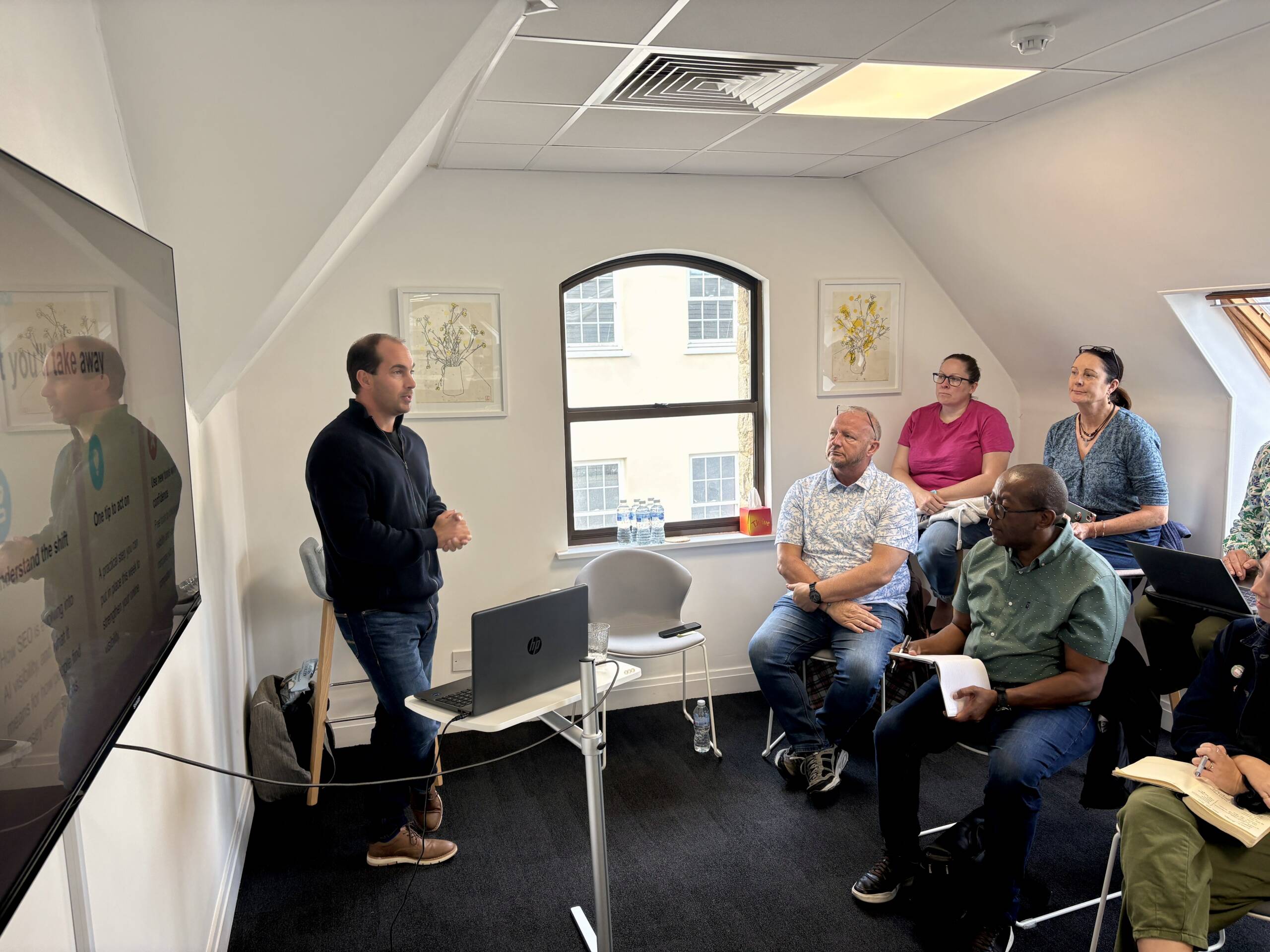
That’s why, as part of Guernsey’s AI Sprint, we hosted small-group sessions at our office with Chris Witthoft, founder of DigiFu. Chris specialises in Search Engine Optimisation (SEO), Generative Engine Optimisation (GEO) and Answer Engine Optimisation (AEO).
If you were unable to attend, here’s what you need to know.
What are AEO and GEO?
AEO and GEO share a simple goal: making sure AI finds your business, describes it accurately and recommends it.
Traditionally, SEO has helped websites appear higher in search results, encouraging people to click through. AI is changing that. It provides answers and recommendations directly, sometimes without a website visit.
Think about asking a friend for a recommendation. You don’t want a long list of possibilities. You want to know who they’d recommend and why. That’s increasingly how people are experiencing online search. As questions become more conversational, businesses need to be part of those answers – or risk being overlooked.
Why should you optimise your website for AI search?
People can increasingly get the information they need directly from search and AI-generated answers, without visiting a website.
One UK analysis reports that 69.5% of UK Google searches ended without a click to a website between January and April 2026. Not all zero-click searches involve AI, but the figure illustrates why website traffic alone no longer tells the full story.
With AI, people can ask questions, compare providers, and explore their options through a conversation. AI is influencing which businesses they trust, consider and contact. That’s why it matters to feature accurately and credibly in AI-generated answers and to give potential customers a reason to take the next step.
AI may have already helped them research their options. So those who visit your website or make contact could be better informed and further along in their decision. You may receive fewer website visitors, but those who engage could be more valuable to your business.
What does AI search mean for PR and reputation?
An AI-generated answer may be someone’s first impression of your business. If information about you is outdated, inconsistent or sparse, that answer may not reflect the business you are today.
That’s why investing in good PR is more important than ever. Effective PR builds reputation, establishes trust, and demonstrates expertise. These qualities matter when people – and AI tools drawing on published sources – discover and decide which organisations to consider.
You’re more likely to trust a recommendation backed by credible, independent sources than a business simply telling you how good it is. AI-generated answers work in a similar way. They can draw on earned media such as news coverage, trade publications, and expert commentary, alongside a company’s own website.
Muck Rack’s What Is AI Reading? study, which analysed more than 25 million links cited by ChatGPT, Claude and Gemini, found that 84% came from earned media, while paid content made up just 0.3%. The precise mix of sources varies by platform, topic and how “earned media” is defined, but the implication is clear: credible third-party information deserves attention.
Relationships with journalists, expert commentary and well-earned coverage can influence audiences today and help inform how AI describes your business later. Coverage can continue to be referenced after publication. So a steady flow of relevant, authoritative stories is more useful than relying on a single annual announcement.
This makes reputation management an ongoing task, and the need to:
- Monitor what is being said.
- Correct inaccuracies at their source where possible.
- Keep your own information current.
- Build a broader record of credible, independent commentary.
Good PR cannot control what an AI system says, but it can help strengthen the information available to it.
How can you make your business more visible in AI search?
The good news is that many of the foundations are familiar: a strong online presence, useful content and a credible reputation. Meaningful improvement may also require technical website optimisation, competitor analysis and a coordinated approach to communications and PR.
Here are five good places to start:
- Find out what AI says about you. Ask questions your customers, prospective employees or other stakeholders might ask. Check whether you appear, how you’re described, and which competitors are mentioned.
- Answer real questions on your website. Publish clear, authoritative content about your services, expertise and the questions customers actually ask.
- Make sure your website can be found and understood. Keep content well-structured and up to date. Check the technical foundations that help search engines and relevant crawlers access your pages.
- Invest in building your reputation. Consistent media relations, expert commentary and thought leadership build credibility and create useful independent coverage.
- Build a consistent online presence. Your website, LinkedIn profile, media coverage and relevant directories should accurately reinforce who you are and what you offer.
For businesses serious about AI visibility, the next step is to assess where they stand, identify opportunities and develop a joined-up strategy combining technical expertise, content and PR.
A big thank you to Chris at DigiFu and everyone who joined us for our AI Sprint sessions.
If you’d like to understand how your business is appearing in AI search, or what to do about it, we’d love to chat: hello@black-vanilla.co.uk.
Frequently asked questions
What’s the difference between SEO, AEO and GEO?
SEO helps make websites discoverable in search results. AEO and GEO focus on visibility and accurate representation within AI-generated answers. The terms often overlap.
Why does PR matter for AI search?
Good PR builds credibility. It helps create reliable third-party information – including news coverage and expert commentary – that AI systems may draw upon.
Does AI search matter for small businesses in Guernsey?
Yes, particularly where customers compare local providers or where a business competes for visitors or clients from overseas. The right investment depends on how customers discover and choose that business.